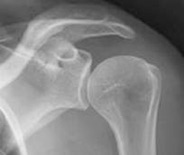
Traditionally thought of as a ‘wear and tear’ phenomenon, the cause of osteoarthritis is generally unknown; however, several contributing factors have been identified. It can be primary osteoarthritis. It can be secondary to trauma, dislocation, inflammatory/crystalline arthritis, avascular necrosis, rotator cuff arthropathy, prior shoulder surgery, history of trauma, and shoulder overuse—individuals who engage in high-intensity overhead activities such as weightlifters and racquet sport players are at increased risk.
Osteoarthritis is usually diagnosed by a combination of clinical examination and history of the presenting complaint. Before proceeding with treatment, X-rays may be taken to evaluate the extent of any damage which may help decide upon the most appropriate treatment. Similarly, a CT scan of the shoulder may also be requested if it is decided that surgical management would be the most suitable option.
The form of surgery chosen should be the least invasive approach required to provide long term pain relief and restore function.
Arthroscopic Treatment
Arthroscopic treatment of the shoulder for osteoarthritis is primarily a temporary therapy in which the joint is “tidied up.” The surgeon removes unwanted material and smoothes off the joint, hopefully providing relief of symptoms.
Ultimately in cases of severe non-resolvable pain or previously failed treatment options, shoulder replacement (arthroplasty) is indicated. There are several variations of shoulder replacements available, some more invasive than others. The choice of replacement depends on several criteria. These include age, activity level, a form of arthritis, and the amount of bone affected.
Hemiarthroplasty involves a prosthetic metal implant being placed into the upper bone in the arm (humerus) which forms half of the shoulder joint. Whilst in total shoulder arthroplasty both sides of the joint are replaced. Depending on the condition of your shoulder, your surgeon may replace only the ball. This procedure is called a hemiarthroplasty. In a traditional hemiarthroplasty, the head of the humerus is replaced with a metal ball and stem, similar to the component used in a total shoulder replacement. This is called a stemmed hemiarthroplasty.
Resurfacing hemiarthroplasty involves replacing just the joint surface of the humeral head with a cap-like prosthesis without a stem. With its bone preserving advantage, it offers those with arthritis of the shoulder an alternative to the standard stemmed shoulder replacement.
The typical total shoulder replacement involves replacing the arthritic joint surfaces with a highly polished metal ball attached to a stem and a plastic socket. Patients with bone-on-bone osteoarthritis and intact rotator cuff tendons are generally good candidates for conventional total shoulder replacement.
https://youtu.be/3GSOo_z0vs4
Another type of shoulder replacement is called reverse total shoulder replacement. Reverse total shoulder replacement is used for people who have:
• Completely torn rotator cuffs with severe arm weakness
• The effects of severe arthritis and rotator cuff tearing (cuff tear arthropathy)
• had a previous shoulder replacement that failed
https://youtu.be/X59Z1a3v-pM?t=11
Reverse shoulder replacement is a type of shoulder replacement in which the glenohumeral joint’s normal ball and socket relationship is reversed, creating a more stable joint with a fixed fulcrum. This form of shoulder replacement is utilized in situations where conventional shoulder replacement surgery leads to poor outcomes and high failure rates. The combination of improved design features and excellent clinical outcome data has led to reverse shoulder replacement instead of other types to primary manage various shoulder problems. We have published our results as part of a multicentre clinical study looking at 159 reverse shoulder replacement results with five years of follow-up. We reported that reverse total shoulder arthroplasty restores the function in the shoulder with significant improvements in function and moderate complications with significant improvement in clinical functions.
https://youtu.be/gqitRa4dm1U